notimeforporridge

Archive for the ‘Recipes’ Category

Puttanesca – it’s not what you think!

In Recipes on September 24, 2011 at 4:14 am

Not every meal has to be complicated, sometimes we are busy and a quick meal made with ingredients you have to hand is required.  This where Pasta Puttanesca comes in.  I have been making this fast and easy dish for years – whenever I am short on time or when I can’t be bothered going out to the shops.  Pasta Puttanesca, translated literally as whore’s pasta, is not so named because it is the favourite food of Italian prostitutes but because it is made from ingredients that most Italians (and Australians these days) have in their cupboard or pantry – they are whoring for ingredients in other words.  Pasta Puttanesca is not an ancient Italian dish.  It made its first appearance in the 1960s so it has been a relatively recent addition to the Italian cook’s repertoire.  The taste is salty from the olives and anchovies, piquant from the capers, and hot from the chilli flakes.

It's also pretty cheap

Pasta Puttanesca  

Ingredients 

500g Italian dried spaghetti

425g tin Italian diced tomatoes

6 anchovy fillets (chopped)

1 tbs capers (chopped)

2 tbs black olives (chopped)

1 onion (finely diced)

2 cloves garlic (minced)

1/2 – 1 tsp dried chilli flakes

pinch oregano

2 tbs olive oil

freshly ground pepper (to taste)

Method  

Heat the olive oil in a heavy based frying pan.  Add the onion, anchovies, garlic, chilli flakes and oregano and fry gently for 1 – 2 mins or until the anchovies have ‘melted’ and the onions are translucent.  Add olives and capers, fry gently for a further minute or two.  Add tinned tomatoes and 1/4 cup water.  Reduce gently for 15 – 20 mins.  Meanwhile, prepare the pasta by dropping it in plenty of rapidly boiling salted water, bring back to the boil and cook according to the directions on the packet or until al dente.  Drain the pasta well and toss in the pan with the sauce.  Garnish with chopped Italian parsley.  Serves 4
You gotta have ricotta continued…

In Recipes on September 11, 2011 at 12:39 am

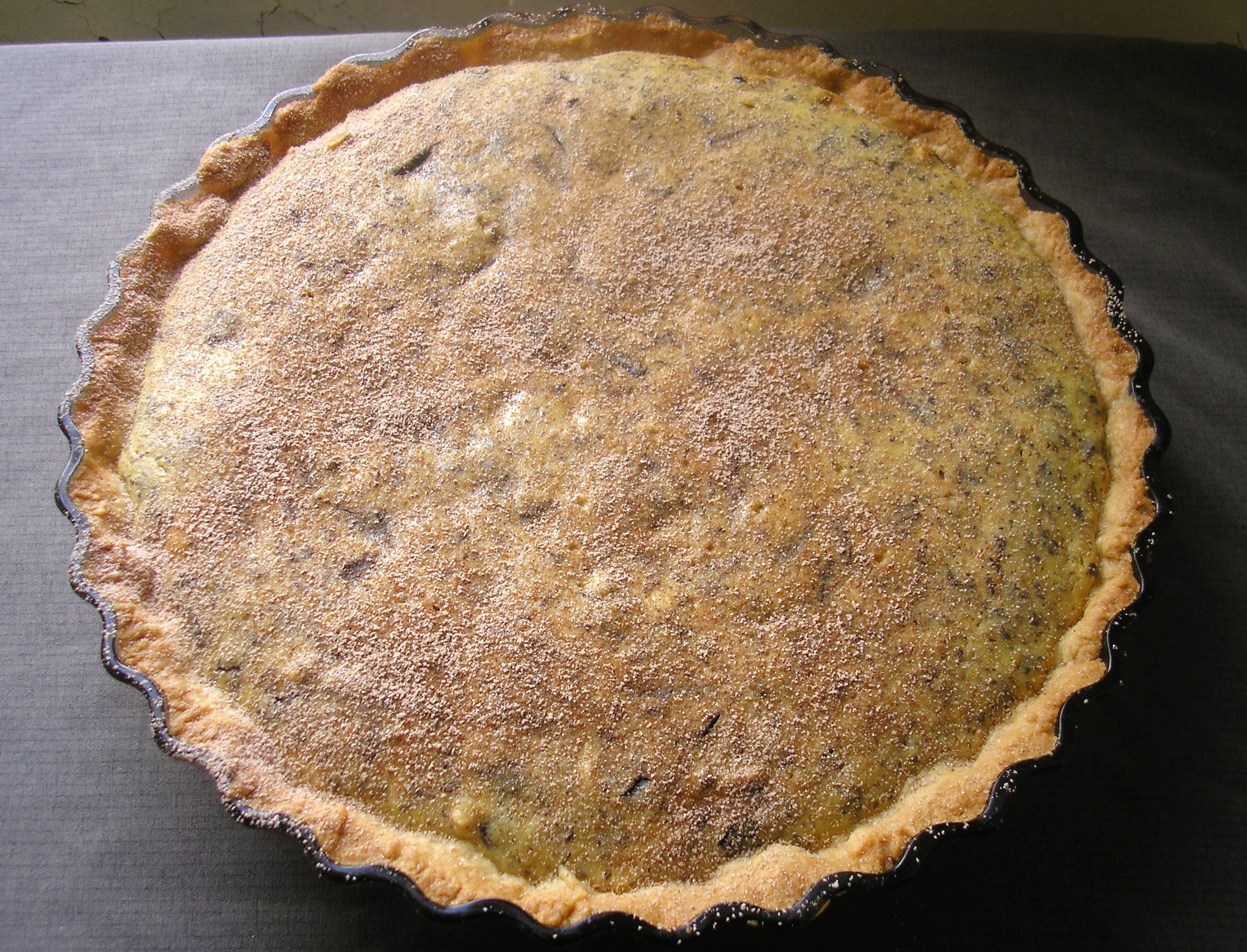
I’m not even going to pretend that I’m being healthy with this recipe for Torta di Cioccolato e Ricotta or Chocolate and Ricotta Tart.  This tart is very rich so it is best to serve it in small portions.  I found the recipe in Toby Puttock’s Cook Like An Italian though there was a problem.  I don’t know if I had a faulty copy of the book or if some other library borrower had ripped it out but the page containing the recipe for the pastry was missing.  I substituted my own recipe so I’ll have to say this is Toby Puttock’s filling with my old recipe for sweet pastry.

Torta di Ciccolato e Ricotta or Chocolate and Ricotta Tart

Rich and delicious

Ingredients  

For the pastry:

1/2 cup unsalted butter

1/2 cup caster sugar

1 cup self-raising flour

1 cup flour

1 egg

a few drops of vanilla extract

For the filling:

320g fresh ricotta

70g caster sugar

3 free range eggs

60g blanched almonds, finely sliced

zest of 1 lemon

zest of 1 orange

120g dark chocolate, finely chopped or grated

1 tsp vanilla extract or the seeds from 1/2 a vanilla pod

icing sugar and cocoa to dust

Method  

For the pastry:  Rub butter into sifted flours until the mixture resembles breadcrumbs.  Add sugar and vanilla and mix to a dough with beaten egg – you may also need a tbs of water to bring the dough together.  Wrap in cling film and refrigerate for at least 20 mins.

For the filling:  Combine ricotta and sugar in a large bowl.  Using a wooden spoon, add the eggs one at a time.  Add the almonds, citrus zest, chocolate and vanilla.  Mix well with the wooden spoon.  Cover and refrigerate 20 mins.

Grease a 25 cm loose-bottomed flan tin with butter.  Roll out the pastry to 3-4 mm thick between two pieces of cling film.  Lift the top layer of cling film off the rolled-out dough and flip the dough over to drape over the tin, using your fingers to push it into the corners and sides.  Peel off the cling film and refrigerate the case for a further 20 mins.  (I had some pastry left over, I stored this in the refrigerator to be used in the next day or two for something else).

Preheat the oven to 200c.  Blind bake the pastry case for 15 mins. or until lightly coloured.  Cool, then  fill the pastry case with the ricotta mixture, smoothing it with a spoon.  Reduce oven temperature to 180c and bake for 30-40 mins or until the pastry is golden.  Remove the tart from the oven and allow to cool.  Dust with cocoa and icing sugar mixture.

Torta di Cioccolato e Ricotta

You gotta have ricotta!

In Recipes on September 2, 2011 at 4:31 am

Ricotta cheese is apparently not really a cheese.  It is a by product of cheese production, but it doesn’t contain the coagulant casein that is an essential ingredient of other cheeses.  Ricotta is made by coagulating other milk proteins (albumin, globulin etc.) contained in the whey that is left over from the cheese making process.  Because ricotta is made from the whey once most of the fatty solids have been removed, it is naturally low in fat.

A certain person I know has long refused to believe me when I tell her that cheesecakes can be made from ricotta cheese and not cream cheese or mascarpone.  She thinks I’m trying to pass some sort of diet or ‘lite’ cheesecake off on her.  Even when I swear on the grave of my departed grandmother that the Italians have been making delicious sweets with ricotta (including cheesecake) for centuries, she gives me a hurt look that seems to say you can’t fool me, in fact you insult my intelligence by even trying.  I was determined to prove her wrong so I made an Italian Ricotta Cheesecake.  When it was ready to eat I nervously carved her a small sliver in case she didn’t like it.  She ate some and declared it “nice but  not the same as real cheesecake.”  I acknowledged defeat and became absorbed in other kitchen tasks.  Ten minutes later I noticed her sneaking back to the refrigerator where she proceeded to cut herself a large wedge, her look was sheepish as she skulked back to the other room with her plate.

Italian Ricotta Cheesecake  

Tasty ingredients

Ingredients  

3/4 cup ’00’ flour

1/3 cup butter

2 tbs sugar

pinch salt

1 tbs water

For the filling:

750g fresh ricotta cheese

2/3 cup sugar

3 tbs ’00’ flour

4 eggs

1 tsp grated orange zest

1 tsp grated lemon zest

1 tbs lemon juice

1 tsp vanilla extract

1/4 tsp salt

3 tbs sultanas

3 tbs candied citron (mixed peel)

3 tbs blanched almonds (chopped)

2 tbs icing sugar

1/2 tsp ground cinnamon

Method  

For the pastry:

Rub butter into flour until mixture resembles breadcrumbs.  Add water and bring the mixture together into a ball.  Wrap in cling film and rest in the refrigerator for 20 mins.  Press evenly into the bottom of a 20cm non-stick spring form pan.  Bake in a 220c oven for five mins.

For the filling:

Beat ricotta, sugar, flour, eggs, orange zest, lemon zest and lemon juice in a large mixer bowl (or with hand held beaters) on high until the mixture is smooth and creamy – about 4 mins.  Fold in sultanas, citron and almonds.  Pour into pastry lined tin.  Bake in a 180c oven until the center is set and the top is golden brown – 1 1/4 to 1 1/2 hours.  Cool.  Refrigerate 12 -24 hours.  Remove outer rim of pan.  Mix icing sugar and cinnamon.  Sprinkle over cheesecake.  Serve with mixed berries or cream (optional).

Delicious ricotta cheesecake

Hint

You can soak the sultanas in amaretto or brandy before adding them to the cake.  If you want a richer cake you can substitute 250g mascarpone for the same amount of ricotta.

More from the Greek diaspora

In Recipes on August 25, 2011 at 4:03 am

After World War II, many people of Greek Cypriot origin settled here in Australia.  Australia’s Greek Cypriot population increased dramatically in the Forties and Fifties due to political instability in their own country, and there was another sharp increase in the Seventies after the Turkish invasion of Cyprus.  Many of these Greek Cypriot migrants settled in Victoria and more specifically Melbourne and of course they brought their food with them.

Here’s a Greek Cypriot recipe that I found in George Calombaris’ Greek Cookery from the Hellenic Heart cookbook.  In it he uses his mother’s recipe for koupes or Cypriot pies – a tasty burghul and lamb parcel a bit like the Lebanese or Turkish kibbeh.

Koupes or Cypriot Pies  

Good as a meze plate or as part of a larger meal

Ingredients  

For the dough:

2 cups fine burghul (cracked wheat)

1 1/2 cups boiling water

1/2 tsp salt

1/2 cup plain flour

For the filling:

50 ml olive oil

25o g lamb or beef mince

1 large onion (finely diced)

1/2 tsp cinnamon powder

1/2 cup almonds (toasted and coarsely chopped)

1/2 cup parsley ( finely chopped)

sea salt and freshly ground black pepper to taste

Method  

Put burghul in a bowl, add boiling water and salt.  Stir well, cover and leave for 2 hours.  In a hot pan, add olive oil and mince meat.  Brown meat until all liquid has evaporated, then add onion and continue to sweat.  Add cinnamon powder, toasted almonds, parsley, salt and pepper to taste.  Cool mix down and reserve.

Add flour to burghul, knead well to form a coarse textured dough, rest for 2 hours.  Take a 50g piece of burghul dough, moisten your hands with olive oil or water.  Place dough in hands and flatten to make an oval shape.  Place 1 tbs of meat mixture on dough and fold sides together to form a small oval shaped ball.  Fry in vegetable oil at 180C until golden brown.  Serve hot with lemon and salt.

Hint

Koupes are good served with skordalia or tzatziki to dip.

Sometimes I hear a mermaid singing …

In Recipes on August 15, 2011 at 5:30 am

I was a mere kid when I first read Charmian Clift’s Mermaid Singing.  I blame that book for many hours wasted daydreaming about life on a Greek island – eating, writing and dancing to the haunting strains of bouzouki music.  Later, when I read Peel Me a Lotus, a loosely autobiographical novel about the time that Clift and husband George Johnston – famous author of My Brother Jack – spent on the Greek island of Hydra, my fantasies continued.  It wasn’t until I read some of the biographical writings about Charmian Clift’s life (and had small children of my own) that I realised  the time Clift and Johnston spent in Greece was not always idyllic.  Johnston was apparently quite a considerate man for the time but  most of the housework and childcare  would still have fallen to Clift.  The combination of being in a foreign country, primitive facilities, the care of small children and her frustration at not having enough time for her own writing, meant that Clift was often far from happy with her life in Greece.  Besides, by the time I was reading Clift’s books the Greek islands that she and Johnston enjoyed in the Fifties had all but disappeared under a swarm of  British tourists.  Luckily for me, there was still Greek food to enjoy.

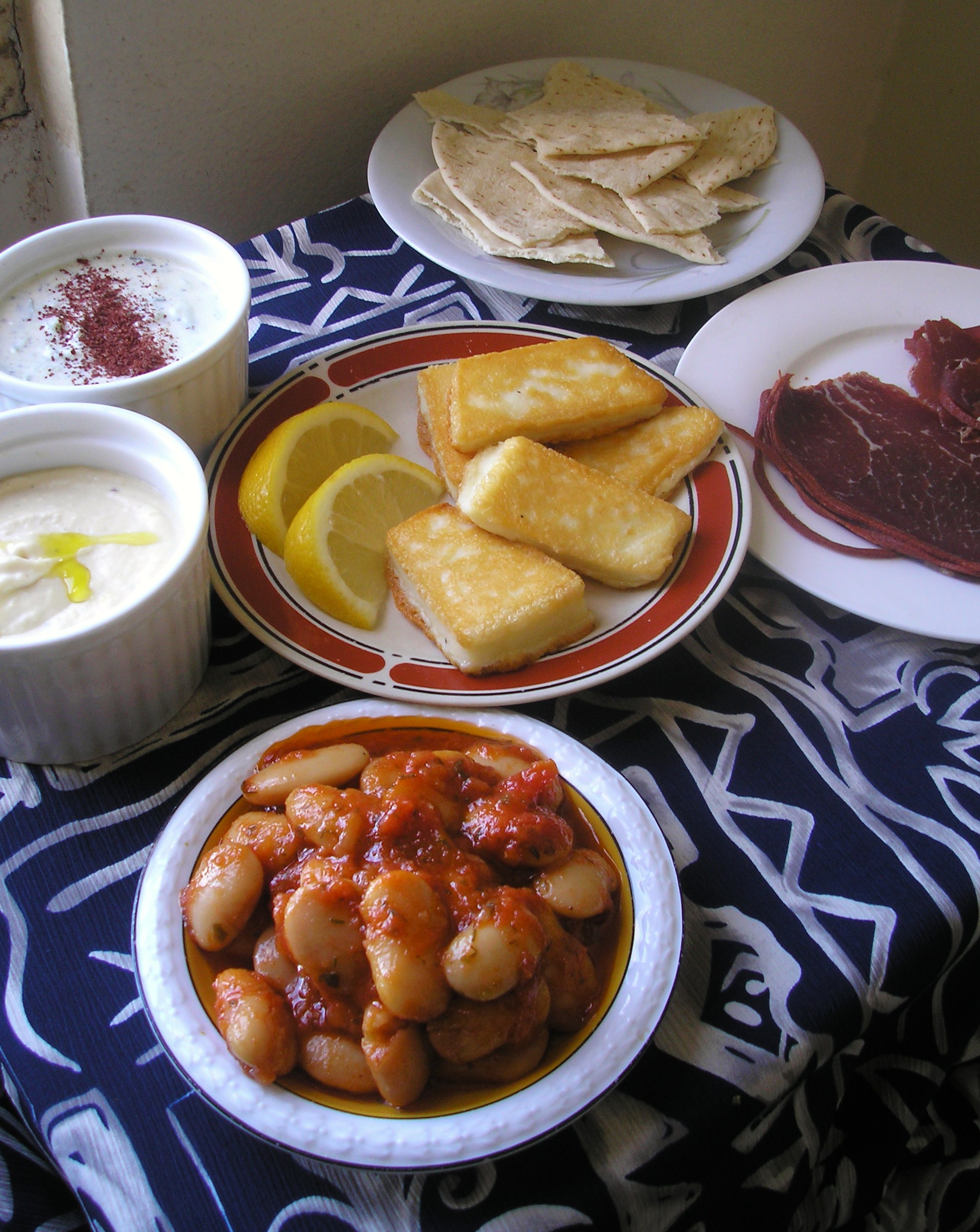
Melbourne is home to the largest Greek population outside Greece itself so it is not hard to find your nearest Greek enclave – mine was in Oakleigh.  There was a distinct smell of souvlakia in the air as I turned into  the mall off Atherton Road so I knew I was on the right track.  After poking around in a couple of small Greek delis I found just what I wanted at the Oakleigh Gourmet Deli  in the Centro shopping centre.  Here I got some kefalograviera cheese to fry for saganaki, some gigantes or giant beans and some pastourma – a type of spiced, cured beef.  With these ingredients the obvious choice for lunch was mezedes.  These are a series of small meze plates served in the same manner as Spanish tapas and enjoyed with the Greek drink of choice – retsina or ouzo. I also made a couple of dips and picked up some pita bread.

Mezedes  

A delicious spread

Skordalia 

Ingredients  

700g potatoes (peeled and chopped into small cubes)

2 cloves garlic (minced)

2/3 cup olive oil

2 tbs white wine vinegar or lemon juice

1 egg yolk

1 tsp lemon juice

sea salt and freshly ground black pepper to taste

Method  

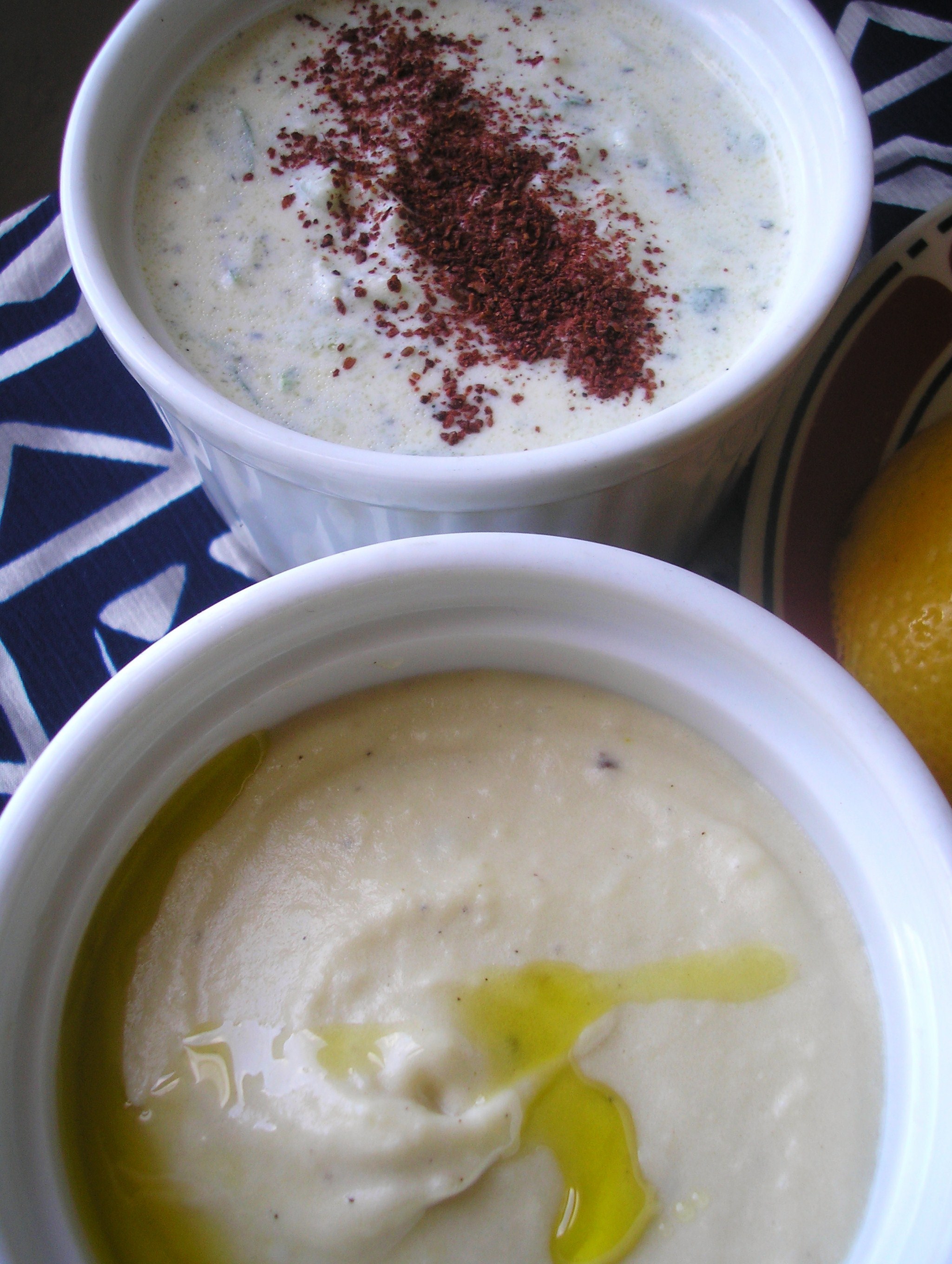
Place the potatoes in a saucepan, cover with cold water and bring to the boil.  Simmer for 10 mins or until tender.  Drain and place in a bowl with the garlic.  Beat with an electric mixer or stab blender until smooth.  Whisk the oil, vinegar, lemon juice, egg yolk and 1/4 tsp sea salt  together in another bowl.  With the mixer on, gradually add the oil mixture to the potato (a bit like making a mayonnaise).  Store the finished dip in the fridge covered with cling wrap – it benefits from sitting.  When ready to serve taste for seasoning and garnish with extra virgin olive oil.

Tzatziki  

Ingredients  

1 1/2 cups Greek yoghurt

2 small continental cucumbers

1 tbs chopped fresh mint

1 tbs chopped fresh dill

1 tbs lemon juice

1-2 cloves garlic (minced)

1 tsp honey

sea salt and freshly ground black pepper to taste

Method  

Grate cucumbers and squeeze over a sieve to remove as much moisture as possible.  Place yoghurt, cucumber and all other ingredients in a bowl.  Mix well.  Cover and place in the refrigerator for a couple of hours.  Serve with pita bread.

Skordalia and Tzatziki

Spilling the Beans Part II

In Recipes on August 8, 2011 at 3:57 am

I find the best time for long slow cooking is Sunday afternoon.  You have Saturday to get your ingredients together and to do any pre-preparation that may be required i.e. marinating, soaking pulses etc.  In the case of my Mexican chilli beans you must soak the dried red kidney beans, or black turtle beans, for at least twenty-four hours before use.  People think that this is too complicated but it really is just a matter of pouring the beans into a large bowl, covering them with cold water and leaving them on the bench overnight.  When I make these beans I do a large amount and freeze some in meal sized containers for later use.  These beans can be eaten in a number of ways.  They can be served simply warmed up with rice and sour cream or they can be roughly mashed with a handful of grated cheese melted through and used as a filling for burritos, tacos or quesadillas.  You can brown some meat and add one or two containers to make a meat and bean chilli or you could warm them in a pan with an egg or two cooked on top for the tasty breakfast dish huevos rancheros.  If you want to turn up the heat you can add some fresh chilli when re-heating.

A versatile dish

Mexican Chilli Beans  

Ingredients  

500 g dried red kidney beans or black turtle beans

4 cans diced Italian tomatoes

1 cup water

4 onions (finely sliced)

3-4 cloves garlic (minced)

2 fresh jalapeno chillies (chopped)

1 tbs ground cumin

1 tbs ground coriander

2 tsp cocoa powder

1/2-1 tsp chilli powder

1 tsp chilli flakes

1 tsp fennel powder

1 tsp dried basil

1 tsp dried oregano

1 tsp all spice

1 tsp paprika

1 tsp freshly ground black pepper

2 bay leaves

1 cinnamon stick

1/2 tsp sea salt

peanut oil

Method  

Drain and rinse the soaked beans.  Place them in a large pot, cover with cold water and bring to the boil.  Reduce heat and simmer covered for 4o-45 mins. or until tender.  Drain and set aside.  Measure all spices and cocoa into a bowl, set aside.  Heat a little oil in a large pot, gently fry the onions, jalapeno chillies and garlic.  Add the spices and cook gently for 1 min.  Add the tomatoes, water and beans.  Bring to the boil then reduce to a simmer and cook uncovered for 2 hours stirring regularly to make sure nothing is catching on the bottom. Serve in any way you prefer.   This recipe makes a large quantity so I would advise freezing at least half of it or making it when you are having a lot of people over!

It isn’t a stew, it’s a ragu

In Recipes on July 29, 2011 at 4:54 am

In Italy you would not necessarily see the sort of Bolognese sauce we serve up here in Australia.  This sauce at its most basic is  onion, garlic, dried basil, beef mince, tomato and seasonings all boiled up together and served over spaghetti.  Some people may add diced carrot and celery to the mix but it is still quite different in texture to the meat ragu style sauces that would be served in an Italian trattoria or home kitchen.  In Italy mince would not be used and the ragu could include any meat from beef to veal or duck.  I like to serve my ragu with rigatoni instead of the usual spaghetti as the large holes in the pasta tubes are good for trapping the rich sauce.

Ragu served with rigatoni

Beef Ragu  

Ingredients  

750 g topside or blade steak (cubed)

2 rashers bacon or 3-4 thin slices pancetta

1 large onion

1 large carrot

2 stalks celery

1 medium bulb fennel

2 cloves garlic (minced)

1 tbs tomato paste

1 tsp dried oregano

1/2 tsp all spice

1 bay leaf

1 sprig fresh rosemary

2 strips orange zest (I use a potato peeler)

1 cup red wine

1 tin diced Italian tomatoes

1 cup beef stock

freshly ground black pepper

1-2 tbs olive oil

water

flour for dusting

Method  

Finely dice the onion, fennel, celery and carrot.  Chop the bacon or pancetta.  Dust the meat with the flour.  Heat some of the oil in a large heavy based saucepan.  Brown the meat in batches.  Remove and set aside.  Add a little more oil to the pan and gently fry the onion, fennel, celery, carrot, bacon and garlic.  Add the dried oregano, bay leaf, all spice, orange zest and tomato paste.  Fry for 1 min.  Add the red wine and cook for a further 2 mins.  Add the tomatoes, beef stock and 1 cup water.  Return the meat to the pan and season with pepper – don’t add salt at this point as the bacon and the beef stock can be salty, you can adjust your seasoning to taste at the end of the cooking time.  Bring to the boil, cover and reduce to a low simmer.  Cook for two hours stirring occasionally.  When the beef is almost falling apart, remove lid and reduce sauce for 15 mins.  Make sure there is still plenty of sauce.  Serve over rigatoni or large penne pasta.

Tasty and filling

Spilling the Beans

In Recipes on July 20, 2011 at 4:42 am

Dried beans are the most versatile, cheap and easy ingredient to use.  Many people are put off by the fact that they need to be soaked in cold water overnight before they are ready for cooking.  This is just a matter of a bit of forward planning, it certainly doesn’t present any real difficulty.  You can substitute canned beans but I find the dried ones, cooked from scratch have a lot more flavour.  One of the most famous bean dishes is the French cassoulet – a long slow cooked casserole of haricot beans, pork and duck confit among other things.  Stephanie Alexander’s recipe contains five different cuts of pork and twelve confit duck legs along with the essential haricot beans.  I would not suggest it as a budget recipe.  I often use red kidney beans to a make Mexican chilli that can be served with burrito tortillas or tacos and a couple of sides such as guacamole, salsa, sour cream and cheese.  These are cheap, easy and filling.

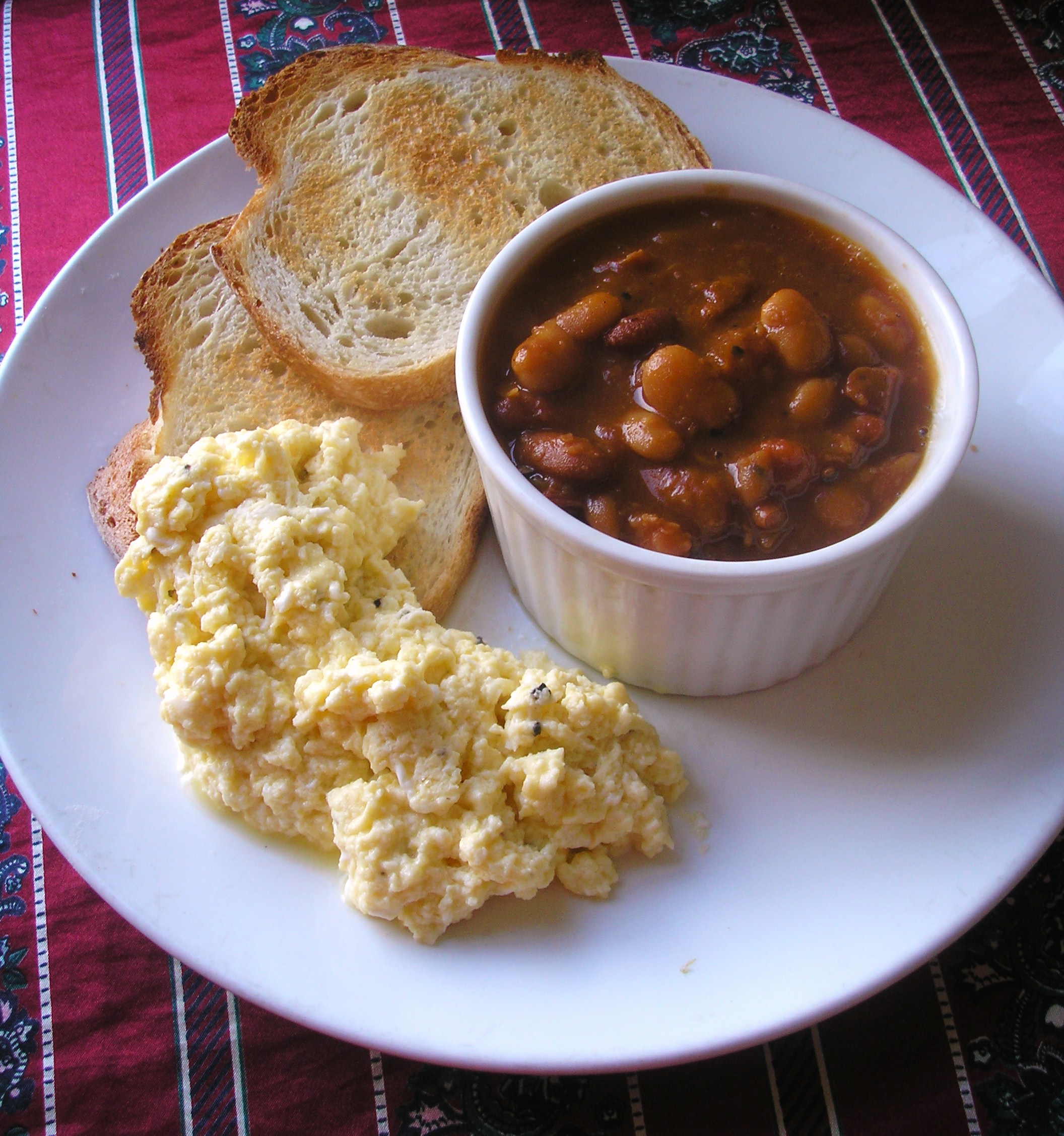
Another bean dish I like to make is Boston Baked Beans.  These are delicious sweet, tangy slow cooked beans that I would usually serve with eggs as a breakfast dish.  This works well as the beans are best made the day before and stored in the fridge overnight to develop their flavour.  The next morning all you have to do is gently warm them while you are cooking your eggs.  Leftover beans can be frozen.

Beans make a great breakfast dish

     Boston Baked Beans  

Ingredients  

1 cup each of dried borlotti and cannelini beans (soaked overnight in cold water)

1 smoked ham hock

2 large onions (finely chopped)

2-3 tbs molasses, treacle or maple syrup (to taste)

1/4 cup loosely packed brown sugar

2 tbs cider vinegar

2 tbs Worcestershire sauce

1 tsp dried mustard powder

1 tsp freshly ground black pepper

1/2 cup ketchup or tomato sauce

1/2 a can of Italian diced tomatoes

 1 or 2 bay leaves

1 tbs olive oil

Method  

Pour beans, along with their soaking water, into a large pot.  Bring to the boil and simmer gently for 45 mins – 1 hour or until beans are tender when pierced with a fork.  Drain, reserving the cooking liquid.  Gently fry the onions in the oil until translucent.  Add all other ingredients including the reserved cooking liquid.  Add a little water if there is not enough liquid to cover the ham hock.  Cover and simmer gently on the stove top for two hours.  If the ham hock is tender, remove from pot.  Discard the fat and bones and shred the ham, set aside.  Cook the beans for a further 45 mins uncovered, allowing the sauce to thicken and reduce.  Add the ham and simmer for a further 15 mins.

No question about Heston

In Recipes on July 12, 2011 at 4:35 am

Love him or loathe him there is no doubt that Heston Blumenthal has a passion for food.  When he is testing for his television series – sampling such gut churning ingredients as bulls testicles and lamprey spinal chords –  he may be considered the culinary equivalent of Man Vs Wild’s Bear Grylls but he is not all about shocking his viewers.  I first became interested in him because I have an abiding interest in food history.  Obviously Heston does too, remember the cockentrice, a mythical meat monster that might have been quite at home on Henry VIII’s table or the ‘meat fruit’ made from the aforementioned bulls testicles – feminist academic Germaine Greer appeared to enjoy eating these a little too much!  It seems that Royal courts and aristocratic households of the past liked a joke.  Food was theater and due to the large number of servants the upper classes maintained they were able to create this sort of food trickery on a regular basis.

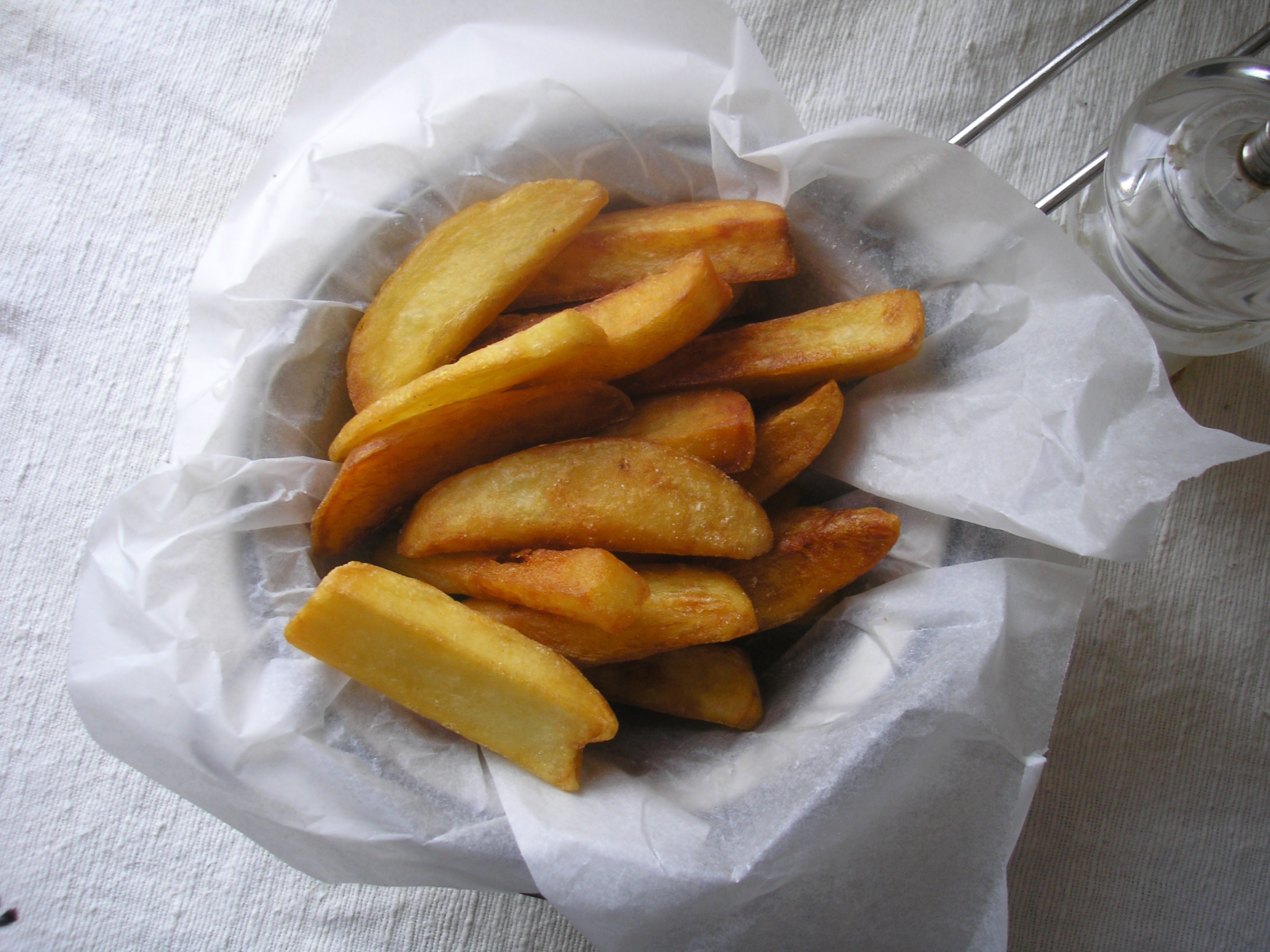
When I approached the idea of cooking one of Heston’s dishes myself I was looking for something a little more accessible so I thought I would give his thrice cooked chips a go.  He uses Maris Piper potatoes which are readily available in the UK but impossible to find here in Australia.  I did some research and found that the closest approximation here was the good old Desiree that is available in every supermarket these days.  The chips were a bit of a process but I can honestly say that the resulting chips were the best I have ever tasted.

Heston's chips

Crunchy on the outside, fluffy on the inside

Heston’s Thrice Cooked Chips*

Ingredients

1.2kg Desiree potatoes

2-3 litres peanut oil (I used much less and fried mine in batches in a wok, just make sure you have enough to cover)

sea salt

Method

Wash and peel the potatoes, then cut them into chips about 1.5cm thick.  When cut, place them in a large bowl for 2-3 minutes under cold running water to rinse off some of the starch.  Drain.  Bring a large saucepan of salted water to the boil, add the chips, bring back to the boil and then simmer until the potatoes are soft.  It is important to make sure the simmer is gentle so that the potatoes don’t start to fall apart before they are cooked through.   Using a slotted spoon, carefully lift the potatoes out of the water and place on a cake rack.  Leave to cool and then put in the fridge until cold (the dry air of the fridge removes excess moisture from the chips via evaporation).  Pour enough oil to cover the chips into a deep-fat fryer (or, if doing in batches, enough to cover the chips in a wok) and heat it to 130c.  A good way to check the temperature if you don’t have a thermometer is to insert the handle of a wooden spoon into the oil, if bubbles form around the handle the oil is hot enough.  Plunge in the chips and allow them to cook until they take on a dry appearance and are slightly coloured.  Remove the chips and drain.  Allow to cool on a cake rack then return to the fridge until cold.  Reheat the peanut oil to 190c (I just made it a little hotter than the earlier frying, you can test by observing the ferocity of the bubbles around the wooden spoon handle).  Plunge in the chips and cook until golden brown.  This may take about 8-10 minutes.  Season with sea salt and serve immediately.

*I have made some modifications to suit the home cook

Best chips I've ever had

Classic Carbonade

In Recipes on July 4, 2011 at 3:53 am

There was frost on the grass when I went for my walk this morning and the days have shortened.  People are going to work while it still dark and returning home in the dark seeing only the faux daylight of the office or the flourescent lit train in between.  It is definitely the time of year for good, comforting food that will warm a person from the inside out.  In my little pot garden only the hardiest of winter herbs are still producing.  There are some small leeks and an abundance of fresh thyme.  The leeks will be good sauteed in some olive oil and butter as a side dish and the thyme makes me think of long, slow cooked braises and stews.  Flicking through my old recipe books I am drowning in a wine dark sea of casseroles but my choice is made when I look in the fridge and see a couple of Cooper’s Sparkling Ales.  I will make one of the first dishes I ever cooked, a Carbonade de Boeuf.

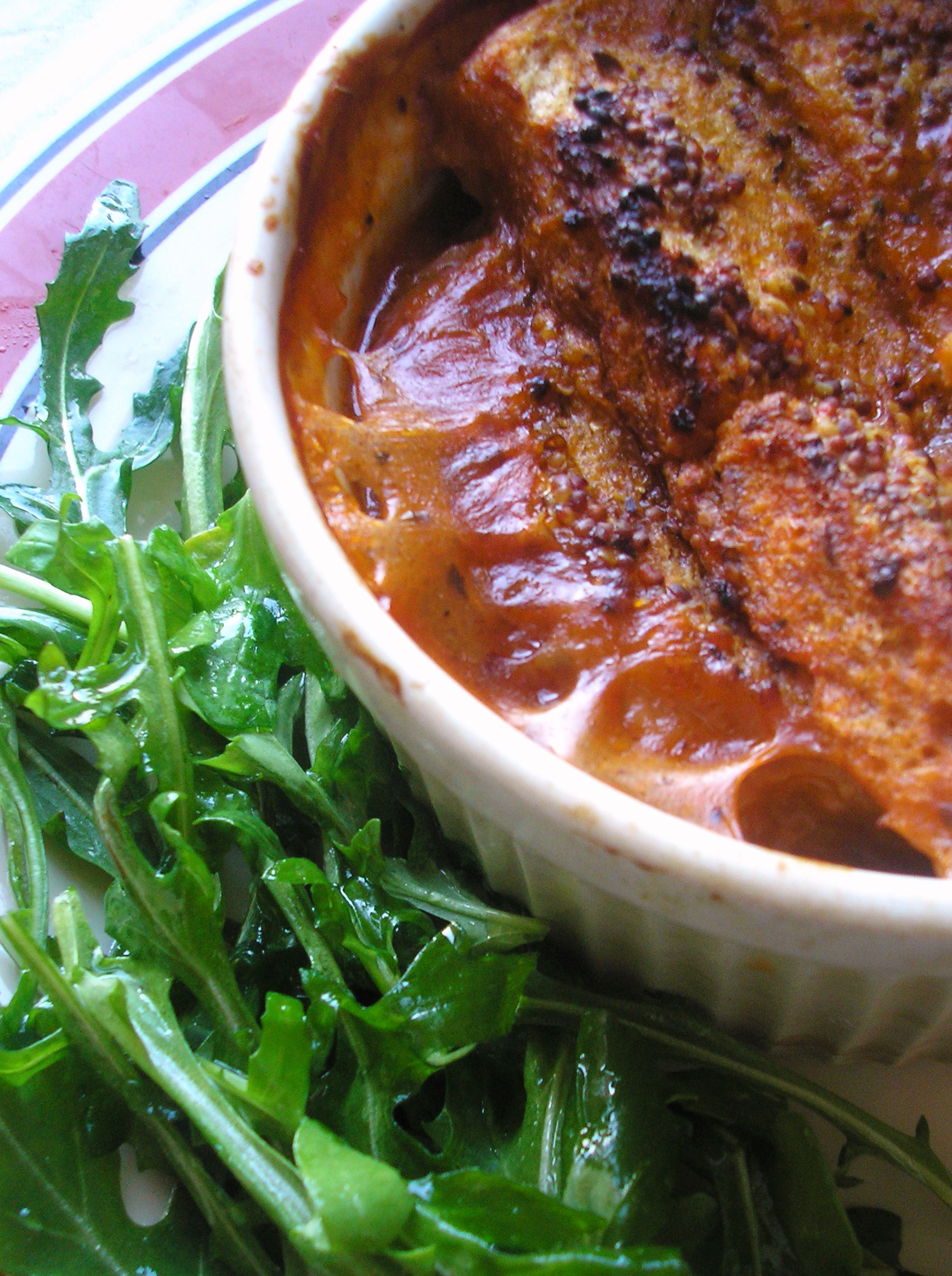
Carbonade de Boeuf is a delicious casserole of beef, onions and beer.  These, along with a few other ingredients, are cooked long and slow until the beef is falling apart and the onions have almost melded into the sauce.  Then it is topped with slices of good bread, spread thickly with Dijon mustard.  The result is a delicious rich stew with a beautiful unctuous consistency, under a crust of crunchy, slightly piquant bread.  It is good served with a roasted garlic mash.

Carbonade de Boeuf

Carbonade de Boeuf  

Ingredients  

1kg blade or chuck steak

2 tbs olive oil

1 tbs butter

3 large onions (halved lengthways and finely sliced)

2 tbs flour

2 cloves garlic (crushed)

1 tbs tomato paste (optional)

bouquet garni (thyme, parsley and a bay leaf)

salt, pepper and a good grate of nutmeg

1 tsp sugar

1 tbs cider vinegar

350ml brown ale (I have found that Cooper’s Red produces a good result)

3 slices of good bread (rye or sourdough) spread thickly on one side with Dijon mustard

2 cups chicken stock or water

Method  

Cube the beef and toss it in the flour.  Heat half the oil in a heavy based saucepan or casserole.  Brown the meat and remove to a plate.  Add the rest of the oil and the butter and saute the onions until they are translucent.  Add the garlic, nutmeg, salt and pepper, cook for 1 min.  Add the tomato paste and cook for a further min.  Add the vinegar, sugar, bouquet garni and beer.  Cook for a 2 mins.  Return the meat to the pot and add the chicken stock or water.  Bring to the boil and simmer gently for 11/2 hours with the lid on ( if cooking in the oven the same amount of time at 180c) or until the meat is really tender.  Top the stew with the bread, mustard side up.  Dunk the bread gently under the gravy and bake, uncovered, in a 180c oven for a further 1/2 hour or until the bread is crisp and lightly brown.

Hint

I thought wholegrain mustard would look better for the photo so I used it this time.  It is not as good, it doesn’t have the piquancy that the Dijon mustard does.